

Guide reviewed and rewritten on 20 October 2026.
Useful author reporting helps an editor understand the publication. It should lead to better decisions, rather than a league table without context.
Before choosing an analytics tool, decide what you want to learn. Which subjects bring readers back? Which articles help them find another useful story? Where does a new contributor need editorial support? Those are clearer questions than simply asking who received the most clicks.
Start with consistent article ownership
Keep WordPress author assignments and public bylines accurate. Agree how to credit co-authored work, guest contributions and substantial revisions. A report cannot compensate for articles assigned to the wrong person or a shared account used for several writers.
Maintain a simple editorial register with the article URL, author identifier, subject, publication date and any major update date. This gives you a way to check a report against the work actually published.
Choose the questions before the software
| Editorial question | Information to compare |
|---|---|
| Which coverage attracts new readers? | Article visits and acquisition context within a consistent period. |
| Which stories encourage further reading? | Relevant next-story interactions, if you have configured and validated them. |
| Does an updated guide remain useful? | Comparable periods before and after the revision, with its subject and seasonality noted. |
| Where does a contributor need support? | Editorial review, corrections and reader feedback alongside analytics. |
Choose a tool or integration that can answer the questions you actually have. Check its documentation, maintenance, costs and data-handling requirements. There is no requirement to buy a particular analytics plugin to use a ThemeIcon theme.
Understand the role of custom dimensions
In Google Analytics 4, additional descriptive data can be sent as an event parameter and exposed for reporting through a custom dimension. Google’s custom-dimension documentation explains the distinction between event-scoped data and user-scoped properties. An article author describes the content being viewed; it should not be treated as the identity of the visitor.
A typical implementation uses a consistent content-author identifier on relevant article events, then registers the matching event-scoped dimension. The exact setup belongs in your analytics integration or tag-management system. Do not assume a visible byline automatically sends that value.
Use identifiers designed for reporting, rather than private email addresses or other unnecessary personal details. Review your analytics provider’s data rules and the consent requirements that apply to your site before collecting additional information.
Validate before trusting the report
- Select known examples. Open two articles by different authors and one ordinary page.
- Inspect the event data. Confirm that the intended identifier appears where expected and is absent where it does not belong.
- Check consistency. Make sure the same author is not represented by several spellings or account names.
- Check the scope. Verify that caching, previews or signed-in browsing have not attached the wrong value.
- Document the start date. New collection settings do not manufacture earlier observations that were never captured.
Keep the test small and record its results. A populated dashboard is not sufficient evidence when you have not checked what the underlying events represent.
Compare like with like
A writer who publishes one long investigation should not be compared with someone producing daily short updates using total visits alone. Consider article count, time online, subject, promotion and the purpose of the work. A small sample deserves a cautious interpretation.
Review examples of the actual articles alongside the numbers. Readers may value a reference guide long after launch, while a timely news item may serve its purpose in a short window. The editorial decision should reflect those differences.
Give the reporting a clear editorial home
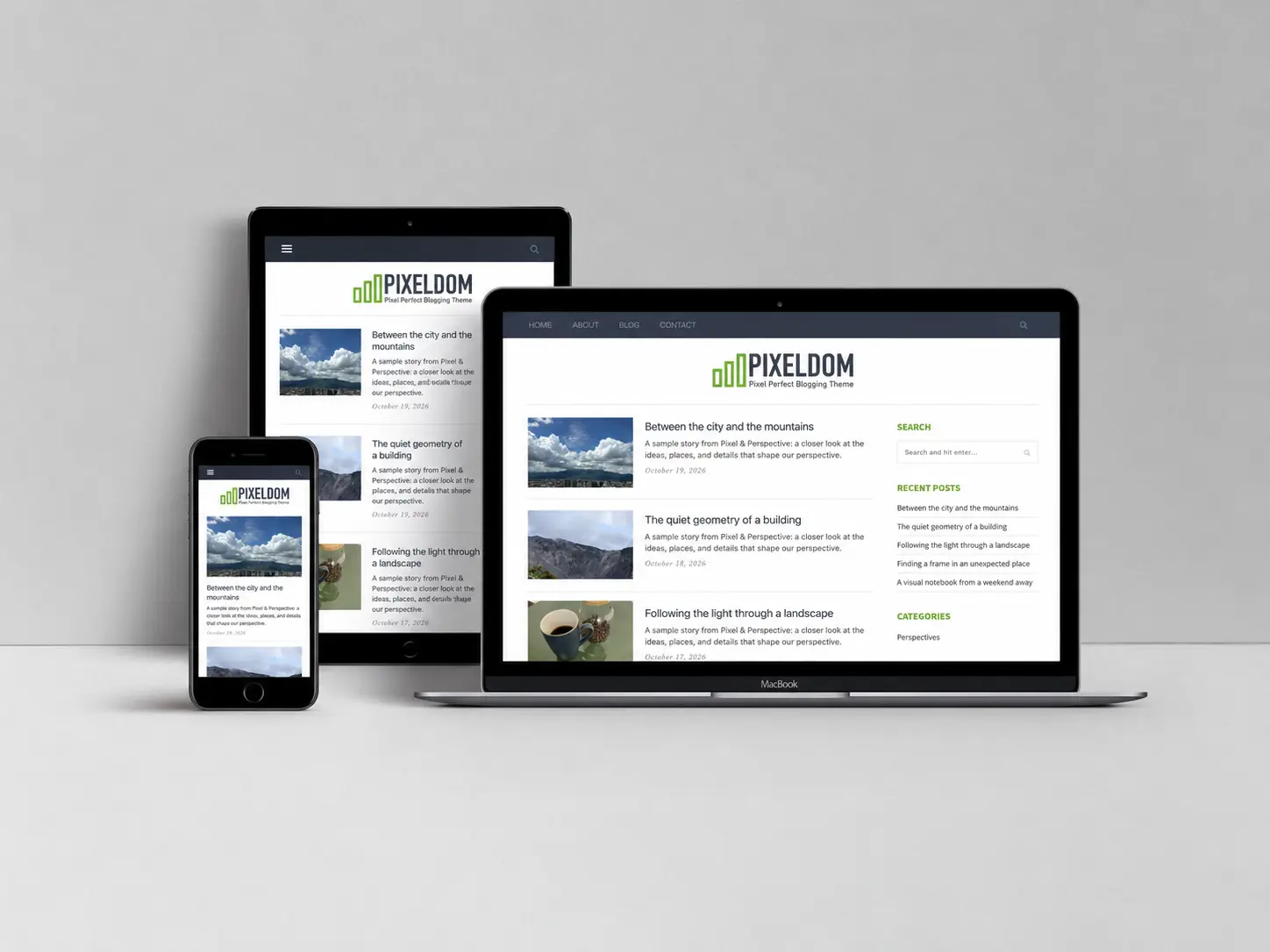
Blogging Icon, Pixeldom and Icon Arena provide visual starting points for publications with different styles. They present your WordPress content; author analytics, reporting dashboards and tracking configuration are separate integrations.
Explore the demos, organize your categories and bylines, then build the measurement plan around the publication you want to run. Our website planning guide can help define that purpose, and the ad-supported publishing guide covers the additional questions advertising brings.